Key Takeaways
Deciding between roof repair and roof replacement depends on your roof’s age, the extent of damage, and long-term cost considerations. While repairs can solve isolated issues, older roofs with widespread deterioration often deliver better value through full replacement.
- Choose roof repair if your roof is under 15 years old and damage is limited to a specific area, leak, or missing shingles.
- Consider roof replacement if your roof is 20+ years old, has multiple leaks, widespread shingle deterioration, or recurring repair issues.
- Repairs typically cost $350–$1,900, while replacements range from $7,500–$14,000.
- If repair costs approach 50% of replacement cost, replacement may be the smarter investment.
- A professional roof inspection is the best way to determine whether damage is localized or systemic and identify the most cost-effective solution.
Table of Contents
If you’ve noticed a leak, some missing shingles, or water stains spreading across your ceiling, you’re probably already asking yourself a version of the same question: Do I need a full roof replacement, or can this be fixed?
It’s a fair question, but also a genuinely difficult one. The honest answer depends on a handful of factors that a good contractor will assess before recommending anything: your roof’s age, how widespread the damage is, how many repairs have already been done, and what the long-term math looks like for your home.
The goal of this guide is to help you understand those factors before you talk to a roofing contractor, so you can have a more informed conversation when you do.

The Core Difference Between Repair and Replacement
In broad terms, roof repair makes sense when the damage is localized, and the rest of the roof is sound. Roof replacement makes sense when the system as a whole is aging, failing in multiple areas, or when repairs have stopped holding.
Roof repair addresses specific, identifiable problems in a section of the roof that is otherwise intact. Think of it as targeted maintenance: replacing a few damaged shingles, resealing flashing around a chimney or vent, fixing a leaking pipe boot, or patching a small area after minor storm damage.
Roof replacement involves removing the existing materials down to the decking and installing a completely new roof system: underlayment, flashing, ventilation components, and shingles. It is not a fix for a defined problem; it is a reset of the entire system.
Both are appropriate in the right circumstances. The question is whether your roof has a fixable problem or whether it has become the problem itself.
Cost Considerations: Repair vs. Replacement
Budget is usually the first thing homeowners think about, and reasonably so. But cost has to be understood alongside age and damage extent, because a cheap repair on an aging roof often costs more over time than a timely replacement.
Repair Costs
Roof repairs typically run between $350 and $1,900, depending on the scope of work. The final number is shaped by several variables: the pitch and accessibility of your roof, the materials currently on it, labor rates in your area, and whether hidden damage to the decking or underlayment is found once work begins.
Common repairs and what drives their cost:
- Missing or damaged shingles: Generally straightforward if limited to a small area. Cost rises significantly if the underlying decking has absorbed water.
- Flashing failure: Flashing around chimneys, skylights, and vents is a common source of leaks. Repair cost depends on how much flashing needs to be replaced and whether adjacent materials are compromised.
- Pipe boot replacement: Rubber boots around plumbing vents degrade over time and are a frequent cause of minor leaks. One of the more affordable repairs when caught early.
- Minor storm damage: A few shingles lifted or lost after a storm can usually be repaired cost-effectively if the roof is otherwise in good shape.
One practical rule of thumb worth knowing: when repair costs approach or exceed 50 percent of the cost of a full replacement, replacement usually makes more financial sense. It is not a hard line, but it is a useful check.
Replacement Costs
Full roof replacements typically range from $7,500 to $14,000 for a standard residential home. The spread is wide because the variables are significant: the size and complexity of the roof, the materials selected, whether the decking needs repair, ventilation upgrades required, and your contractor’s labor rates.
Beyond the upfront cost, replacement delivers long-term value that repair cannot match: new manufacturer and workmanship warranties, improved curb appeal, better protection against water intrusion, and the opportunity to upgrade materials for better performance or energy efficiency. A well-installed new roof also tends to reduce the kind of recurring maintenance costs that start to accumulate on an aging system.
For homeowners who need help managing the cost of replacement, financing options are available. See our guide to Roofing Costs and Financing: What Homeowners Need to Know for a full overview.

Roof Age and Damage: The Two Factors That Matter Most
Cost alone rarely settles the repair vs. roof replacement question. Roof age and the extent of the damage are the two variables that put cost in context.
When Repair Makes Sense
Repair is typically the right call when the roof is relatively young, the damage is confined to a clearly defined area, and the rest of the system is in solid condition.
Repair is usually appropriate when:
- The roof is under 15 years old, and the problem is isolated
- A few missing shingles were lost after minor storm damage, with no sign of water intrusion below
- A single leak has been traced to one flashing point, vent, or pipe boot
- Ceiling stains are limited, and the source is confirmed and accessible
- Cracked or curled shingles are confined to a small section of one slope
Acting early matters. Minor localized damage that gets repaired quickly almost always costs less than the same damage left to develop. A small flashing leak that goes unaddressed for a season can work its way into the decking, insulation, and framing, turning a $400 repair into a much larger project.

Standard Lifespan Reference
Knowing what roofing materials were used and roughly where your roof sits in its expected lifespan are among the most useful inputs in the repair vs. replacement decision.
| Roofing Material | Expected Lifespan | Notes |
| 3-tab asphalt shingles | 15 to 20 years | Shorter lifespan; being phased out by most contractors |
| Architectural/dimensional shingles | 25 to 30 years | Most common residential choice in Ohio |
| Metal roofing (steel or aluminum) | 40 to 70 years | Higher upfront cost; significantly longer service life |
| Wood shake | 25 to 30 years | Requires more maintenance; less common in Ohio |
| Tile or slate | 50+ years | Heavy; not suited for all structures |
These ranges assume proper installation, adequate attic ventilation, and routine maintenance. In Central Ohio and the broader Great Lakes region, the freeze-thaw cycle shortens the effective lifespan for roofs that were not installed or ventilated correctly. A roof that might have years of reliable life left in a milder climate can become a replacement candidate sooner in Ohio’s winters.
When Roof Replacement Makes Sense
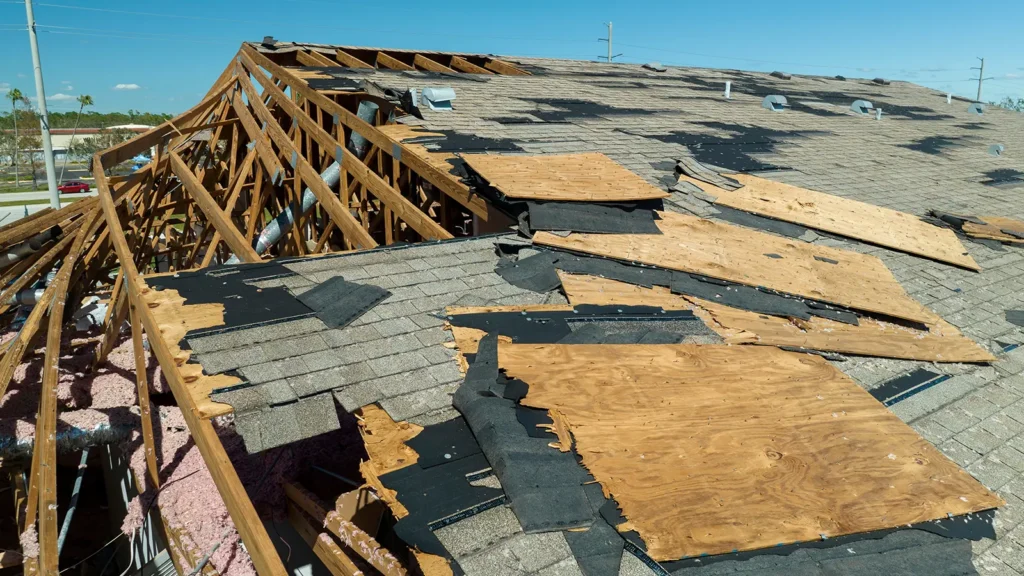
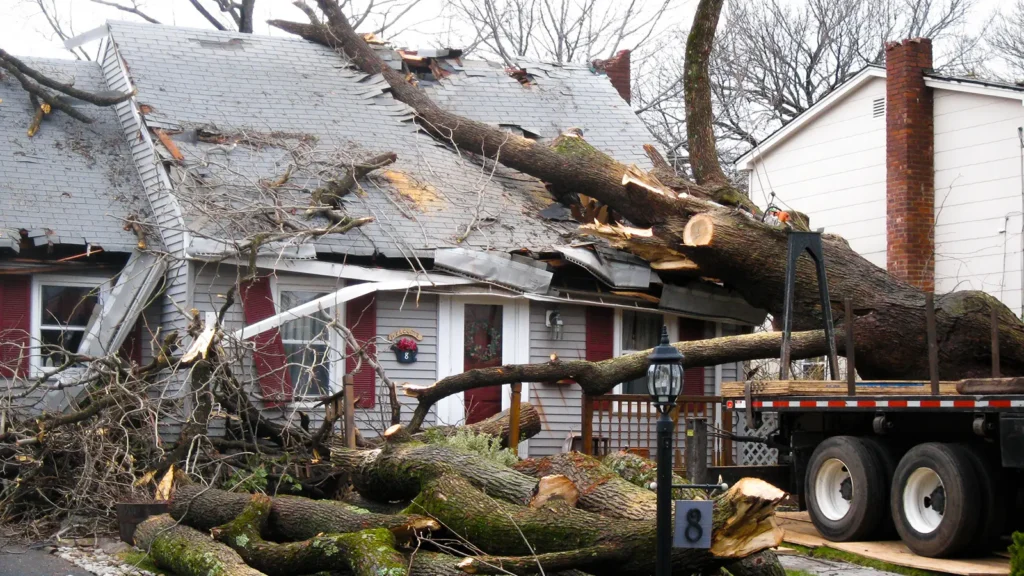
Roof replacement is typically the right call when the roof is at or near the end of its expected lifespan, when damage is widespread, or when repairs have stopped solving the problem.
Replacement is usually appropriate when:
- The roof is 20 or more years old and beginning to show deterioration
- There are multiple separate leak points, not a single isolated source
- Granule loss is widespread across multiple slopes, indicating material breakdown
- Shingles are curling, cracking, or blistering across large areas
- There are sagging sections, soft spots, or signs of structural compromise
- Ceiling stains are appearing in more than one room
- Repeated repairs over the past few years have not held
- There is visible daylight in the attic, or confirmed mold growth
Repeated repairs are often the clearest signal. If you have had the same roof worked on multiple times, and problems keep returning, the issue is usually not the spot that was most recently repaired. It is the system as a whole: aging underlayment, poor ventilation, and moisture that has been seeping in for years through multiple entry points. At that stage, another repair is typically money spent delaying an inevitable replacement.
If your situation involves storm damage and a potential insurance claim, see our guide to Storm Damage and Roof Insurance Claims for guidance on what your policy may cover.
Understanding the Scope of the Damage
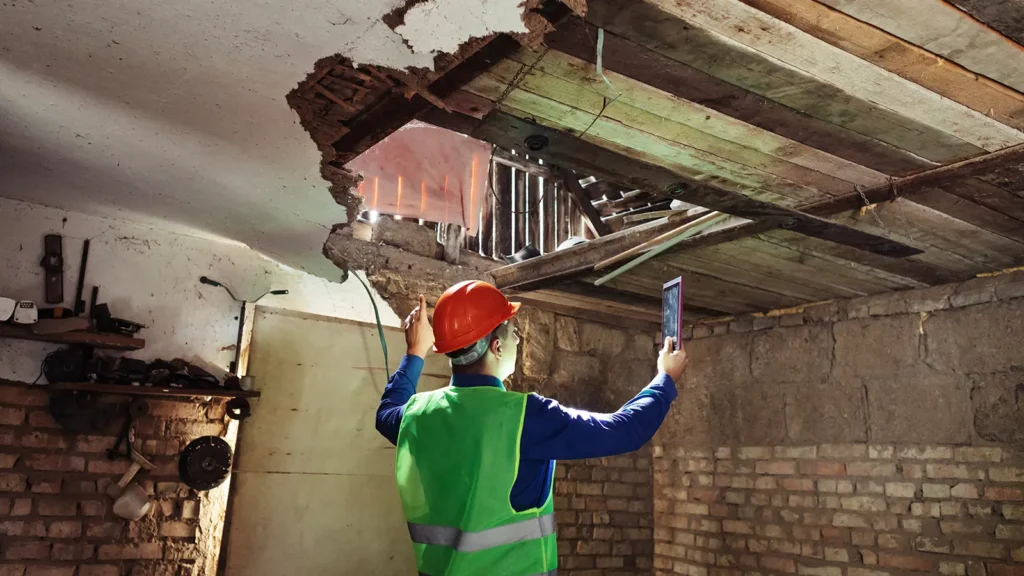
Not all damage reads the same way. How far the damage has spread is often more meaningful than any single symptom.
Localized Damage
Localized damage is contained to a specific, identifiable area: one section of shingles, one flashing point, one vent. It is the kind of damage that suggests something went wrong in a particular spot, not that the roof as a whole is failing.
When damage is genuinely localized, and the roof is otherwise sound, repair is usually cost-effective and appropriate. A few caveats worth knowing:
- Matching replacement shingles to an aged roof can be difficult. Shingles fade and lose granules over time, so new shingles installed on an old field may look noticeably different. This is a cosmetic issue, not a quality one, but it is worth flagging to your contractor upfront.
- What looks localized on the surface is not always localized underneath. A professional inspection can determine whether water has traveled beyond the visible damage area before you commit to a repair scope.
Widespread or Systemic Damage
Widespread or significant roof damage involves multiple failure points, or a pattern that suggests the underlying system is failing rather than a surface problem in one spot. Signs include damage across multiple slopes, granule loss that looks like it has been building for years, or a pattern of shingles failing at roughly the same time across different areas.
When damage is systemic, repair addresses symptoms rather than causes. You may be able to patch several areas and buy some time, but a roof in systemic decline tends to develop new problems faster than repaired ones disappear.
A partial replacement is worth considering when significant damage is cleanly limited to one section and the rest of the roof has genuine remaining life. That is a judgment call that depends on the specific condition of your roof, and it is worth getting a professional opinion on before proceeding.
In Central Ohio, the winter freeze-thaw cycle is a primary driver of systemic damage on older roofs. Minor cracks that develop in shingles over the summer can expand significantly when water freezes inside them, allowing water to work under the shingle layer.
Ice dams, which form when heat escapes through a poorly insulated attic and melts snow that then refreezes at the eaves, can force water under shingles and into the decking, even on roofs that look intact from the outside. These are not isolated incidents; they are seasonal stress events that compound year over year.
Long-Term Value: What Each Option Actually Delivers
The right choice is not just about what the work costs today. It is about what it costs, and what it saves, over the next decade.
What Repair Delivers
Repair offers a lower upfront cost, a faster turnaround, and a focused solution when the problem is genuinely isolated. When those conditions are met, it is not a compromise; it is simply the appropriate level of intervention.
The limitation is that the repair does not reset the clock. It addresses the problem in front of you without changing the underlying age and condition of the roof as a whole. On a newer roof with one isolated issue, that is fine. On a roof that is aging broadly, today’s repair may be followed by another one in the same season, and the one after that may cost more.
Warranty coverage also differs. Repair warranties apply only to the specific work performed and the area repaired. They do not reset or extend the original manufacturer’s warranty on roofing materials, nor do they extend the original contractor’s workmanship warranty on the full roof system.
On a roof that is still well within its expected lifespan, that distinction does not matter much. On one that is approaching the end of it, the narrower coverage of a repair is worth factoring in.
What Replacement Delivers
Replacement provides a complete reset. A new roof system addresses not just visible damage but the full range of underlying issues that contribute to failure: aging underlayment, compromised flashing, ventilation problems, and any decking that has softened from years of moisture exposure.
The tangible advantages of a full replacement include:
- A new expected lifespan starting from the installation date
- Full manufacturer and workmanship warranty coverage on all materials and labor
- Improved curb appeal, which carries meaningful weight if you plan to sell
- A reduced likelihood of recurring leaks and interior water damage
- The opportunity to upgrade insulation, ventilation, and material performance in one project
- Potential homeowners’ insurance benefits for impact-resistant materials, depending on your policy
For homeowners planning to stay in the home long-term, replacement of an aging roof is often the more financially rational choice, even when the upfront cost feels steep. The accumulated cost of multiple repairs, plus any interior damage from leaks that develop between them, can exceed a replacement cost faster than most people expect.

Why a Professional Assessment Is Worth Getting First
One of the most common mistakes homeowners make is trying to diagnose a roof problem from the ground or from their attic and drawing conclusions from what they can see. Roof problems are frequently not where they appear to be.
A water stain on a ceiling often sits directly below the entry point of the leak, but not always. Water travels along rafters and decking before it finds a low point and shows itself. A professional inspector knows to look upstream from the stain, check the attic for moisture patterns, and trace the actual source rather than its most visible symptom.
A thorough inspection covers:
- The full roof surface: shingle condition, granule loss, cracking, cupping, and any visible lifting
- Flashing integrity around chimneys, skylights, vents, and all penetrations
- Pipe boot condition
- Gutter condition and any granule accumulation that indicates material breakdown
- Attic moisture, ventilation adequacy, and signs of mold or rot
- Decking integrity: soft spots or areas that indicate water absorption
- Sagging or structural irregularities
For any work that will cost several thousand dollars or more, getting at least two independent inspections and estimates is a reasonable practice. Compare not just the final number but what each contractor is proposing to do, what warranties they are offering on materials and labor, and whether they are licensed and insured in your state. Local experience matters too: a contractor who works regularly in your area understands regional weather patterns, local code requirements, and the specific challenges your climate presents.

Repair or Replace? A Practical Summary
Use this as a quick reference once you have had a professional look at your roof.
| Choose Repair If… | Reason |
| The roof is under 15 years old with isolated damage | Repairs are cost-effective and appropriate when the system is otherwise sound |
| Damage is confined to one area or component | Targeted repair addresses the problem without disrupting what is working |
| The repair cost is well below 50% of the replacement cost | The 50% threshold is a useful check on whether repair still makes financial sense |
| You need a short-term fix before a sale or renovation | Repair can be the practical choice when long-term ownership is not the goal |
| Choose Replacement If… | Reason |
| The roof is 20+ years old and showing deterioration | A roof at the end of its lifespan is more cost-effective to replace than to maintain |
| Damage affects multiple areas or slopes | Multiple failure points usually indicate systemic decline, not isolated problems |
| Repeated repairs have not solved the problem | When repairs stop holding, the issue is typically the system, not the spots being fixed |
| Insurance covers storm damage, and the system is broadly failing | If replacement is covered, delaying it means continued exposure with diminishing returns |
| You plan to stay in the home long-term | Replacement delivers more financial value the longer you remain in the home |
Both repair and replacement can be the right choice. What matters is matching the decision to your roof’s actual condition, not the condition you are hoping it’s in. A professional inspection gives you the foundation for that decision. Everything else follows from there.
Making the Right Choice for Your Roof
Ready to get a professional opinion on your roof?Whether you’re dealing with a suspected leak, visible damage, or simply want to know where your roof stands, Able Roofing is here to help. As Columbus’s trusted residential roofing contractor, our experienced team provides honest assessments, quality craftsmanship, and lasting solutions for every roofing need. Contact Able Roofing today to schedule your inspection and get the answers you need to protect your home.